
Drop Nineteens Have Filled the World with Dreams: An Interview with frontman Greg Ackell
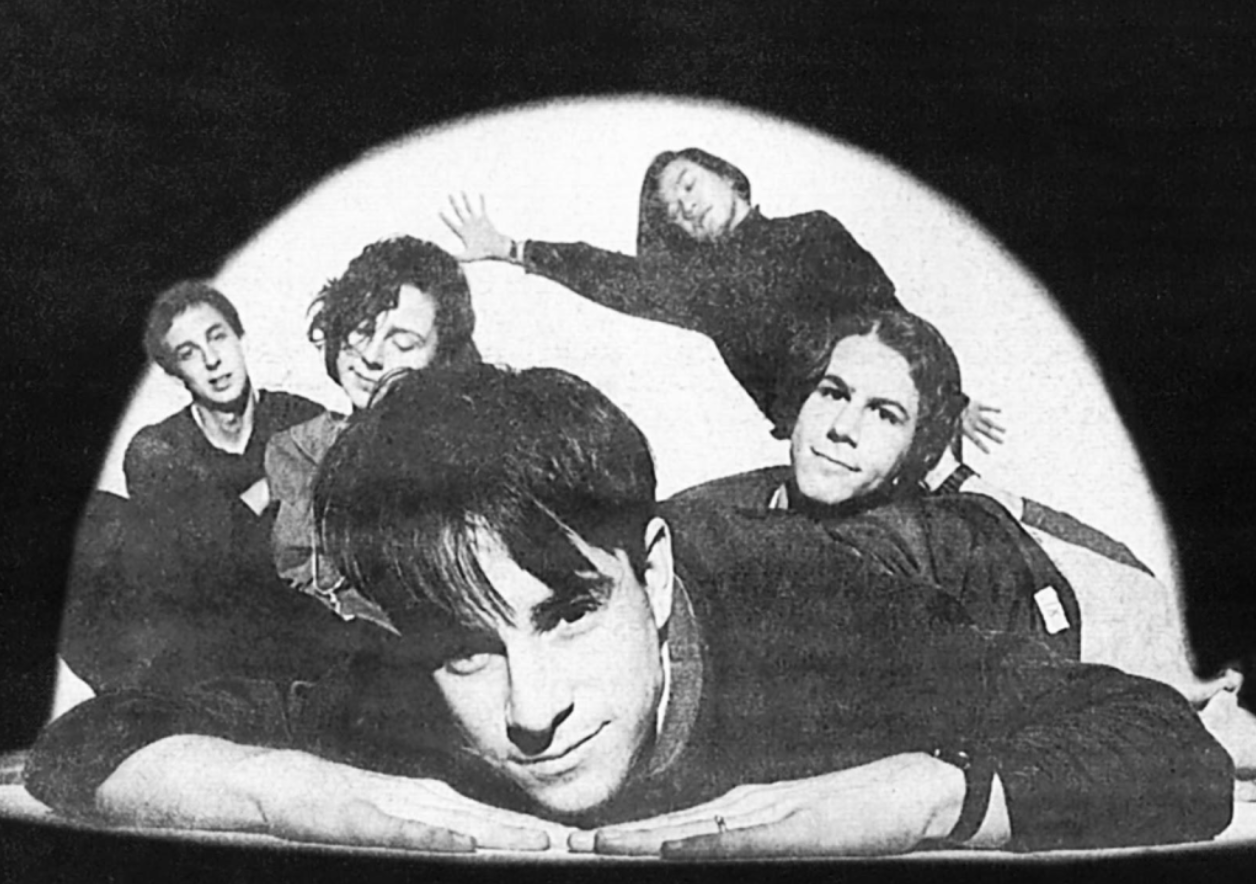
Interview by Ciara Rose Belfiore, cover photo by Steve Double
WLUW's Ciara Rose Belfiore spoke with Greg Ackell, frontman of Drop Nineteens, in the midst of their 2024 Fall tour. Drop Nineteens formed in 1990 in Boston, and their debut album, Delaware, has become a shoegaze classic. After splitting in 1995, the band reformed in 2022.
Ciara Rose Belfiore: What’s it like to experience your new fan base? Is it strange to consider how an album you put out 30 years ago has become such a cult classic, among people in their 20s and among a millennial audience?
Greg Ackell: Yeah, it is strange. I’ve realized a couple of things over the past year or so, having released Hard Light, going out on the road, and meeting people from the audience. How it’s strange is that the last time I was on a stage, when I looked out, it was people my age. And now, it’s people much younger, and then you see a few people maybe my age in the back. But strangely not a whole lot in between, it's an odd kind of chasm.
GA: And the kids, I call them kids, but I called them kids back then, even as a kid, you know? Because they’re always upfront. You can always see them and they have great energy, and it’s always a pleasure to play to that element. So that’s the first thing. The second thing is that having done all these interviews, I’ve done tons of them in the past year, and what I’ve come to realize about Delaware is that it’s an album that people discover when they’re maybe 17, 18, 19 years old, maybe 20. It's an album they discover right around the same time in their lives as when we made it, and I find that kind of telling in a way about that record, it's not only out of the past but it kind of speaks to a sensibility, a sort of age group, you know?
CRB: Yeah
GA: But I’ll tell you, it’s a badge of honor, really. I think that age group, that sensibility is like, man, I don’t remember feeling anything as hard as I felt when I was that age! What an age to be moving people, because you just feel harder and longer and stronger. You’re more Romantic, capital “R” you know? Not like rom-com but like romantic, dramatic, at that age group, so yeah it’s a cool thing.
CRB: Does listening to Delaware evoke a certain feeling or memory for you? Because I feel like when I hear people talk about the album, it brings them back to a point in their life, does it do the same for you?
GA: I don't think it does. I don’t listen to it that much. I was in an in-store in Austin, TX, recently. We played a festival called Levitation, and we did an in-store at a place called End of an Ear, which is a play on “End of an Era”.They were playing it in the record store, and I think that’s the first time I’ve kind of listened to it in a long time, like that, you know? Just with it playing on a fairly good sound system in a space. Now and then when we’re getting ready to play live we’ll have to like reference, and we’ll have to look at a song. When we were editing the “Kick the Tragedy” music video, for example, I obviously listened to that song, you know, a thousand times when we did that.
GA: In terms of the album itself, it’s very rare that I listen to it, but I listened to it then and I enjoyed it. But it could have gone the other way. You know? I could go both ways on that kind of thing sometimes. You know, like music, film, and books. Everything that we kind of entertain ourselves with or fill ourselves with. They’re not always the same; it’s not a constant, the way that we interact with them. It’s like you could like to listen to a song, and it could be the actual listening of that song that could be memorable unto itself. Quite apart from the song, you know? And it’s the same thing with films, like I said, you can remember a certain time you watched a film, as opposed to another time where it just kind of went over your head. I find that’s the case with my own music, every now and then, it can go well, but a lot of times it doesn’t when I try to sit and listen to it.
CRB: How did the cover of Lana Del Rey’s “White Dress” come about?
GA: This happens to me a couple of times a year, where I just can’t get past a song. I mean, I hear it and I just can’t stop listening to it, over and over and over, like nonstop. This was one of those songs where I just couldn’t get past it. It was so good and interesting to me, and every single thing about it, every nuance in it. I thought, like maybe if I get my band to do it, I can kind of get rid of it in a way and just stop being so obsessed with it. I think that worked in a way, cause you can get sick of it by kind of immersing yourself so much in it like that. That was one of the reasons, but another reason is that this band has a history of doing covers that are a little bit, I don’t wanna say unexpected, but that you know it’s not a joke. When we’re covering Madonna’s “Angel”, that’s not a joke. I love that song, and it was the same kind of situation. The problem with covering these songs is that once you’ve done your rendering, and then you hear the original and it’s like uh… why did we bother? You know? Cause then I go back to obsessing over how good the thing is originally. They’re just really amazing songs, and we’ve covered some other strange ones too. We covered “Fight for Your Right” by the Beastie Boys. I suppose that was a little bit more tongue-in-cheek. We did that for a Peel session in the early 90s at the BBC, and we covered Barry Manilow’s Mandy. That’s a song that I found beautiful, too, but of course, people thought that was a joke. We’re a little silly with it, I suppose, but Dinosaur Jr., for example, they covered “Just Like Heaven” in I think ‘87, and it was like the year that Kiss Me Kiss Me Kiss Me came out, The Cure album. A lot of people made the same conclusion about them. They thought that they were kind of making fun of The Cure. They weren’t, they just love that song. And then on Hard Light, we cover a band called The Clientele, a song called “Policemen Getting Lost”. Again, that’s just a song I love. I was looking for something for Paula to add that would kind of be her own project in a way. I said it’s not assigned, but I suggested a couple of covers. She did the cover of “Policemen Getting Lost”, and I think she just knocked it out of the park, so we put that on the record.
CRB: Do you have a favorite story, maybe not even in regards to Delaware, but just in terms of Drop Nineteens?
GA: There are a lot of stories in our short tenure, but I remember one very cool thing. We were playing in Paris, and this was probably in 1992. I think we were playing with PJ Harvey on a European tour. We were big fans of Polly’s, and she’d come to like us. I remember being in Paris, and we just used to never play the song “Kick The Tragedy” ever. We played it, I think, as a joke once we were really high on drugs at some place in Denmark. It was like a commune, and apparently, there’s a recording of it online. So people think that we used to play that song, but we never did, except as a joke that one night, and somehow it got recorded.
GA: It was a strange song, right? There’s a 9-minute instrumental with a spoken interlude. It was an unusual song to everybody. I knew it was central to the album when we put it on the record, but I didn't really know what to make of it myself. I thought it was kind of an experiment, really, and it didn’t occur to me to play a 9-minute instrumental with a spoken interlude; it just seemed pretentious. Which maybe it still is, but at the time, being a new band, you just wouldn’t go out and kind of put that in front of people like that in a live setting unless you were really bold. Which I suppose we weren’t bold enough to do that and but what I remember about “Kick the Tragedy” was the title of the song. I remember thinking of that song title. You know how we were talking about how you can remember certain things? I don’t remember thinking of other song titles, but I remember thinking of that one. I remember it being pitch black, being in bed, and just seeing the words “Kick” “The “Tragedy” and I thought “that’s good”. Cut to you know seven or 8 months later, and we’re in Paris. I’d never been to Europe, and I’m there not because my parents took me or because I’m on some kind of school exchange or something. I’m there because I made an album. I’m on stage and playing in front of like 3,000 French kids, and someone with a French accent screams out from the audience, “Kick the Tragedy!”. Just the 3 words, they didn’t even say “Play Kick the Tragedy”, just “Kick the Tragedy”. It was a real kind of moment for me because it was like coming from the darkness in my bed in Boston to Paris. Spanning that chasm of being out in the world, and it was a really moving moment for me just to hear that.
CRB: Have there been any venues that you’ve enjoyed coming back to, or new ones that have been cool to play?
GA: I believe I met you at the Metro, right?
CRB: Yes.
GA: In Chicago, the last time we played there was probably the worst show we ever played. That’s probably saying a lot because we played a lot of bad shows, but Steve and I got in a big fight that night. I remember we were on tour with a band called Blur across the U.S, it was a long tour and everybody was getting on each other's nerves. We got in a fight backstage, and I think Steve, like, kicked in a wall or something in the dressing room. We were actually banned from that club. I know that our record company told us we could never play there again, and it was fine because we were just about to kind of wrap it up playing all together anyway. Cause this is around ‘94, it was around the time that we were kind of tapering. When we played the show at the Metro, onstage, it just occurred to me and I said “Steve, I wanted to apologize”, you know? I said in front of the audience, and that was kinda a nice moment.
CRB: Was there a reason, after Drop Nineteens broke up, that you felt so strongly that you didn’t want to make music again?
GA: Yeah, I mean, it was just that I wasn’t very happy as a person. Like I’d said, I’d given up being a fan of music. It was my dream to be in a band and to make music, and once that happened, it was like a bubble bursting. You know, then it became a job, and all the kinds of things that I was looking forward to, they all just kind of fell flat. I just wasn’t very satisfied. I also had felt that, well, I had kind of set out to get signed, mix a record, and play some shows, and the band did like a lot more than that. We didn’t become the Rolling Stones, of course, or Radiohead or something like that, who you’d call like kind of a lifer. We weren’t lifers, you know? But I felt like the goal had been met. I felt pretty satisfied by what we achieved, and it’s not like we went out on top either. We released another album that didn’t do quite as well. It was a kind of matter of, you know, some boxes got checked, and I just felt like I didn’t see what the point in really continuing was. I did say if we’re gonna do a third Drop Nineteens album, then it would have to be now, and this is in the mid to late nineties. I said if we’re gonna do it, it’ll be now. I wasn't asking to make another record. I was just saying if we’re gonna do this, it’ll be now or it’ll be never, and I meant it. It wasn’t a threat either, it was just a fact, and that was true until it wasn’t. A couple of years ago, it just occurred to me for the first time that I wanted to hear a Drop Nineteens song. I was curious what it would sound like, I had no idea and it was the first time I became curious about wanting to hear it and um so I got ahold of Steve who is kind of my- I would say we’re kind of like writing partners, I mean he- our songs typically originate by one of us uh i do all the lyrics and the vocal melodies but as far as the chords go and stuff like that it’s either kind of a- it’s a little Beatles-like, we are not the Beatles, I’m not comparing us to the Beatles, but the structure of it, it’s like a little Lennon-McCartney. Where you know it originates with one of us and then we collaborate, the two of us to make it something, and then we bring the other band member in to add their parts. And he was just like ecstatic I think to hear that we’re gonna do- that I was willing to and I guess the others were also on board as well - maybe there’s a bit of kinda you know I don’t wanna say they were waiting around for me to say I would do it but they were you know they were certainly willing when I decided finally to come back. So that was fortunate, you know? It could have been I decided to do it, and it wouldn’t be viable, you know? People wouldn’t be interested, but they were.
CRB: I know you kind of talked about when you’re recording music that you kind of find it hard to listen to music when you’re in the recording process, do you find that you gravitate towards other forms of media as a result of that?
GA: Yeah, when Drop Nineteens kind of hit in the early 90s, I immediately kind of got out of music myself, you know, stopped following bands and stuff so much and got very deep into film. So I’m a kind of a film- what do they call it? A cinephile. And so I’m into films, I read a lot, but yeah, I go in and out of these things. I've said this before, and I remember someone brushing me off, you know, it's all entertainment. I mean music, of course, it gets into us and it becomes part of us. These things that we see and listen to and read, but really, we’re entertaining ourselves. I don't see why that’s not saying a lot, I mean, I think we need to be entertained. You can build a kind of persona over your likes and dislikes. I mean, I don’t have children, for example, and so at my age, you kind of get you know- it's a lot of just me! I mean, I obviously have relationships and those kinds of things and have friendships, but yeah, it’s like a very kind of self-involved experience, this life thing, and it’s not short at all, it’s long as hell. So you know, these things we do to entertain ourselves, they kind of become us in a lot of ways. So yeah, I’m a big film guy in particular. I’m a big Robert Altman fan. I like some Godard stuff out of the French New Wave. I could go on and on. I just saw a really good movie called Strange Darlings, which is really well done. Your audience should go check it out. I recommend it highly.
CRB: Well, this wasn’t one of my original questions, but I wanna ask about the Delaware skate deck that you have, who made that?
Amongst the art on Greg’s wall, a skate deck with the album art for Delaware sits in the corner.
GA: So there’s a streetwear company in London that wanted to do a capsule collection of Delaware. This was kind of right when we were coming back for Hard Light, and you know, there hadn’t been merch in years, and for the reissue, I was gonna change the cover to daffodils instead of a gun. But I was torn about that, of course, and I wasn’t apologizing for anything. On the other hand, my feeling was that if I’m going to put a new product out there, I just wouldn't put a gun in a young person’s hand in this day and age and sell it. I just wasn’t comfortable doing that. I will say I think most people get it, most of the fans get it, they’re like, well, it’s your record, and I think they can identify with why we wouldn’t want to do that. Furthermore, the reissue with the daffodils on the cover, all of the proceeds from that go to Artist for Action, which is a great charity that tries to fight gun violence, started by the Sandy Hook victims, and it’s a great cause. Anyway, this company wanted to celebrate 30 years of Delaware, and I was a little bit on the fence about it, but when they came up with the concept of doing a skate deck, I said, “Alright, we’re in”. So they did a skate deck and on the other side it has the line from “Kick the Tragedy”, which is, “Fucking Phil’s off on his board somewhere and I’m sitting here getting more and more lost in everything” and that’s pretty cool. My friend Phil, who that line is about, died a little bit after Delaware came out. It was very tragic, and it was with a gun. So this is yet another reason that I didn’t wanna revisit the gun. But anyway, I did this collection with them, and I just thought, “Wow, Phil would be really stoked to have his name on a skateboard”. By the way, Phil’s in the music video as well. He’s in it 3 times. He’s the kid who’s jumping onto a bench, and the skateboard goes in the water; it’s kind of a funny shot. He does a huge ollie in San Diego off some stairs, and then at the end, he’s the kid on the train platform. So that was great, we had like a trove of videos to look through of Phil, that his brother had shared with us years later. We got to go through those and digitize them. So it’s just good seeing my friend again.
CRB: So you talked in an interview about how Steve, like, overnighted you a Jazzmaster, do you still have that guitar, is it one that you use?
GA: I do, I don’t use it on stage, but I do. It’s a J. Mascis Jazzmaster, they’re you know, it’s Squire, it’s not a Fender, and I have an original Fender Jazzmaster. There’s a good story about that. I didn’t have guitars anymore, I had some for years. I live in Brooklyn, but I had a farmhouse in Connecticut that I would go to sometimes on weekends. I was trying to restore this house, it’s a 1700s farmhouse. I had a barn, silo, and stuff, it was fun for a while. The truth is, I didn’t take care of that stuff that well, and even though it’s a pretty nice neighborhood and stuff, the guitar got stolen out of the barn. This happened because I wasn’t there, it’s my fault, you know? I’d still love to murder the people who stole those things, but it’s on me, you know? So I didn’t really have guitars left. Steve overnighted me that Jazzmaster, and strangely, I hadn’t picked up a guitar in 20 years, and I didn’t even know if I could play. I wasn’t that good to begin with, but I just started playing and started writing immediately. Then, of course, it was a year of you know, arduously recording it and seeing it come to life. There’s another good story from the old days. I guess some night in Liverpool, in the UK, I had given my original Jazzmaster to a girl. Her name was Susan, and like most things, I had no memory of where that guitar went. It wasn’t my favorite guitar to play, I played it in the “Winona” video. It’s a black Jazzmaster, but it just wasn’t my favorite; it wasn’t my go-to. I don’t know, I must have liked this girl, and I just gave it to her. And when we came back, I’d never had social media in my life, it just never occurred to me. So this woman thought maybe I had died because there was no presence, and again, it’s a little unusual. There was no way to really find me, and when we came back. We made this announcement on Twitter at the time that I was alive and well, and that we were gonna make a record. She reached out to the account, and Steve said, “Oh, this girl Susan, she says she’s got your guitar”. So it was quite literally 30 years later, and she said, “Do you want it back?” And I said, “Well, it’s your guitar, but I could maybe use it this year”. So I sent her some money to ship it, and she sent it back to me. So the guitar came back to me, which is pretty wild. It’s a cool story, and it’s maybe the only instrument from those days that’s original to that era. I probably played it on Delaware, on a couple of the tracks. So it’s good to have that one back.
CRB: Is there something in particular about Jazzmasters that you like the sound of, or that you like playing them?
GA: They do sound great. I have to admit there are a lot of aspects of “shoegaze” that I find to be tropey and just like overdone. And I’m not even that big a fan of shoegaze music or an authority on it at all. Which I don't find ironic at all, I mean I think it's just, of course, why would I? It’d be like too obvious or something. They are just undeniably great guitars, the sound of the pickups, the single coils. But on tour, I’ve actually been playing a Mustang, which I think is just more powerful-sounding. There’s something kind of like inactive about the Jazzmasters, unless you’re J. Mascis and you have- I think he has something like 6 cabinets that he surrounds himself with or whatever. But I just have one vintage cabinet, it’s called a Mad amp. Which I love, and that was in the barn. That wasn’t taken! Probably cause it’s so heavy, but it’s a really cool vintage cabinet and I love that cabinet. I had it in Chicago. I can’t play everywhere with it because sometimes we’re flying. So why Jazzmaster? That’s one of the reasons, they’re really great guitars to record on. Although Moto had a ‘65 Jaguar, and I think I played that quite a bit on Delaware. He also had a Gibson 335, and the Gibson is like a good match. The two main guitars in the band are- even though we have like four up there sometimes playing- it’s kind of like me and Moto. Paula definitely adds a lot, but we’re the two major sounds up there. So you’re gonna have single coil and humbucking, or if I’m on acoustic, then he can play like his Jaguar. I don’t like this piling on of the same thing over and over and over. So again, to get a more complex, more fulfilling sound, I like to mix it up. On Hard Light, there are all kinds of guitars, there’s a Telecaster on there and a lot of acoustic. It’s interesting, I love acoustic, and it doesn’t seem to be much of a shoegaze type instrument, but sometimes if I hear something on acoustic I can’t shake how good it sounds on that, and I can’t switch it. I write a lot on acoustic.
CRB: This might be difficult to think back, but do you remember the first album you ever bought?
GA: Yeah, I think it was Olivia Newton-John’s Totally Hot. I think it was, and I love that album. I remember it was at Sam Goodie’s on 6th Avenue. We lived with my mother, my brothers, and I, but we would come to Manhattan to visit my dad. He lived on West 57th Street and 6th Avenue, and I remember going to Sam Goodie’s, which was the record store there. I remember holding it in my hand and looking at it, I’m going to be honest, I just liked the girl on the cover. I think maybe Grease had come out, and I thought she was so beautiful, and I was kind of obsessed. There’s a line in the song Winona where I say, “Was it you who sang in Xanadu?” and I’m singing about Olivia there.
CRB: It all comes back around! It all makes sense eventually.
GA: Well, I don’t know about all of it…
CRB: A good amount of it.
GA: Pieces.
CRB: Okay, my last question is regarding flowers, because you had a floral business for many years. If you had to pick a flower to represent Delaware and Hard Light, what do you think each of them would be?
GA: I think Delaware would be lilacs, well, no, I can’t say that. I have to say it’s Daffodils! I mean, that’s the motif now. I remember being very into Daffodils at the time when I was making that record. I do love flowers, and I had a girlfriend just before making Delaware who lived in England. She would send me Daffodils all the time in the mail, like crushed daffodils, and I just love that flower. They’re just unusual, they’re very personlike, you know? They’ve got like a face on them. Hard Light… maybe Hyacinths. These are both bulbs, it’s interesting that I’m choosing two bulbs. I’m thinking of a Robert Mapplethorpe photograph of Hyacinths and the light the way it hits them, the angular lights. It reminds me of the album cover a little bit.

GA: The reason I was saying lilacs for Delaware, maybe, was because they’re one of my favorite flowers, if not my favorite flower. Their window is so fleeting, the season is like a flash of lightning. They come and they go. They’re so fragrant and they’re plentiful. They’re all over the place in people's yards and stuff, so they’re not like a fancy flower, but I find them amazing. But the fact that they’re so fleeting, when I think of Delaware, I do think it’s a moment in time. So I have two answers. Delaware reminds me of two flowers, Daffodils and Lilacs.
GA: Everything’s fleeting; it’s a good thing to embrace. There’s a line in the song “Daymom”, which is my favorite song on 1991, that says, “Find a way to love, the day is growing closer”, and that’s a romantic who wrote that. But it’s a way to embrace that it isn’t forever. It takes forever, but everything ends.
Transcription edited for length and clarity