Phoebe Bridgers Emerges From the Darkness at the United Center
Article by Jack Iboshi // Photos by Matt Grubb
Phoebe Bridgers likes to keep her fans in the dark. A long break in between albums, few and-far public appearances, and only the occasional instagram story–distance has become essential to how Bridgers exists as a modern artist. Unsurprisingly, her live show is no different. Yet this time, the darkness only brings her closer to her fans.
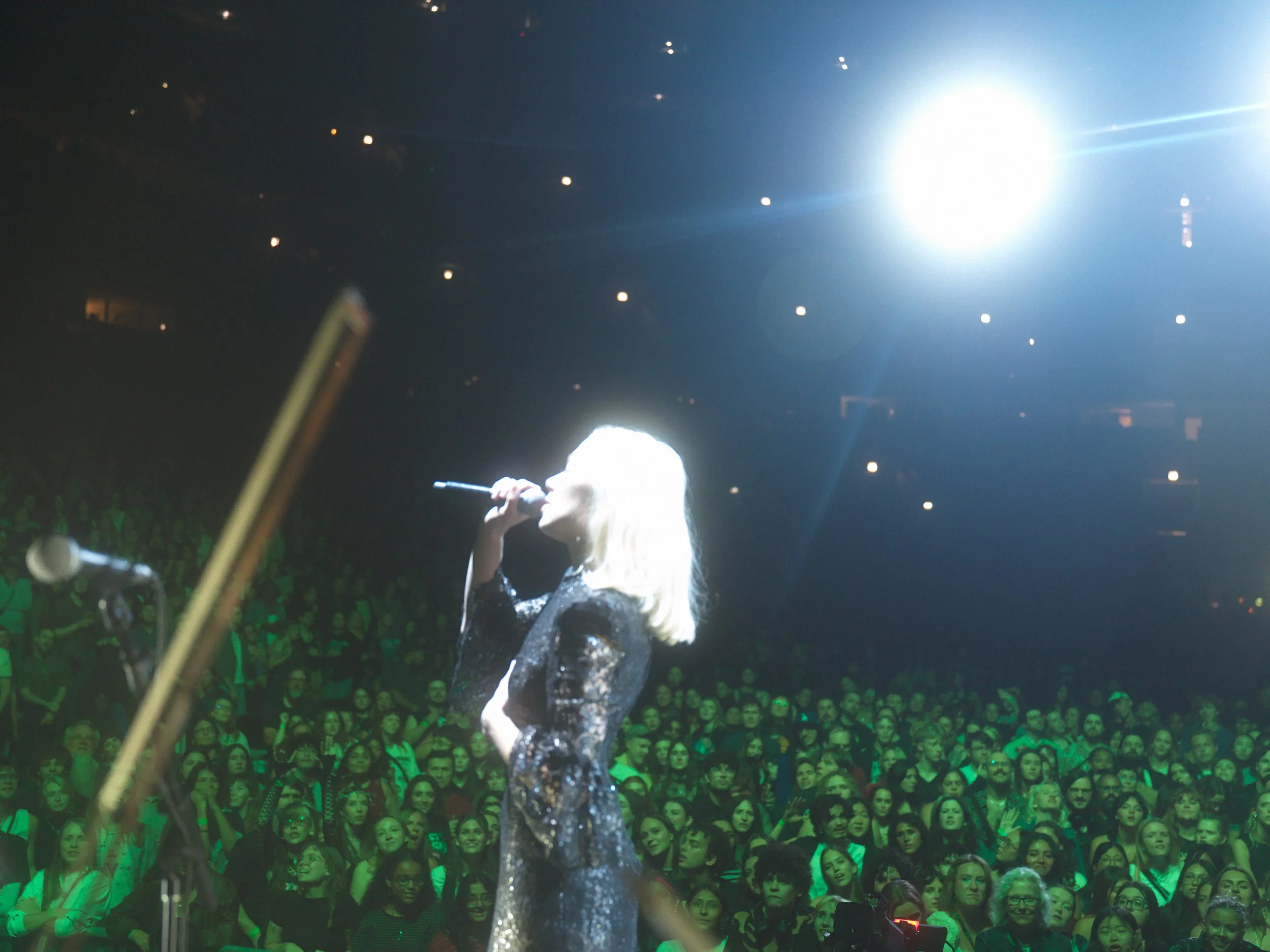
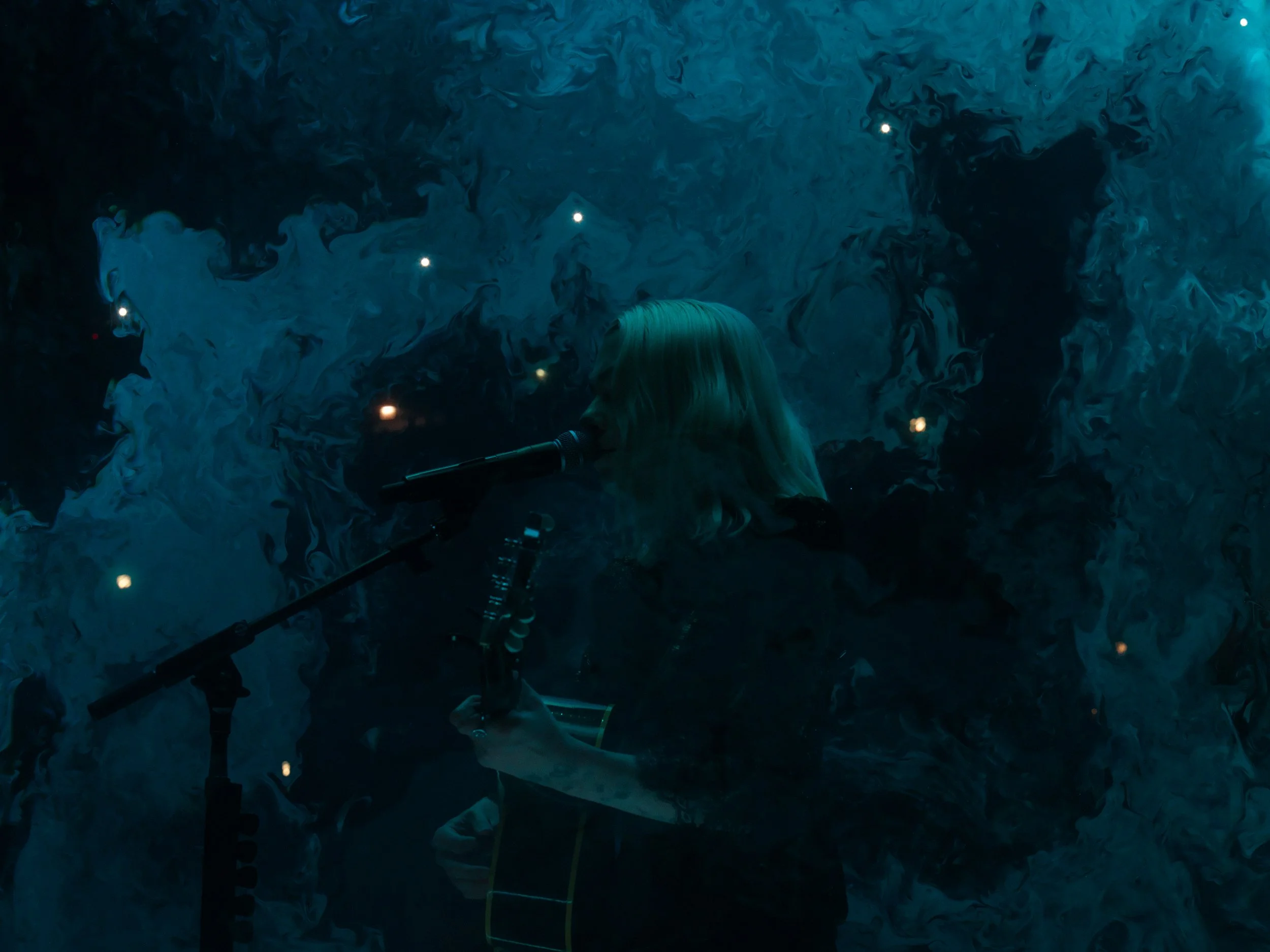
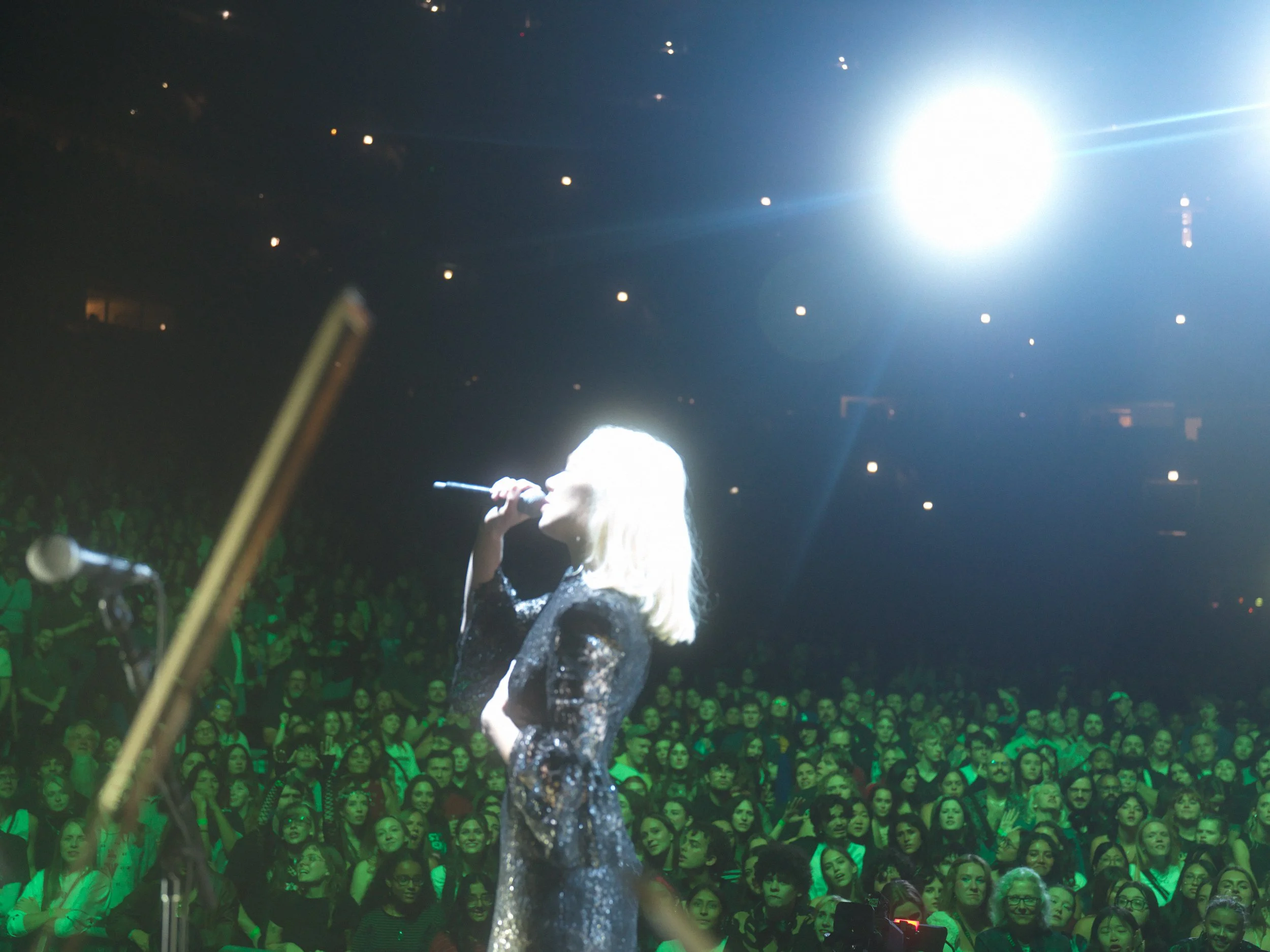
At the United Center, Bridgers uses the desolate, dry, and open space of an arena to her advantage. Rather than fighting its size, she transforms it into a planetarium, filling the empty space between herself and the audience with light. Even the show’s strict no-phone policy becomes part of that world. Beyond protecting the intimacy of the performance, Bridgers explains that the arena needs to be completely dark for the lasers to fully work. Putting away the phone was not just key to staying present, but every darkened screen allowed the arena of thousands of people to temporarily disappear.
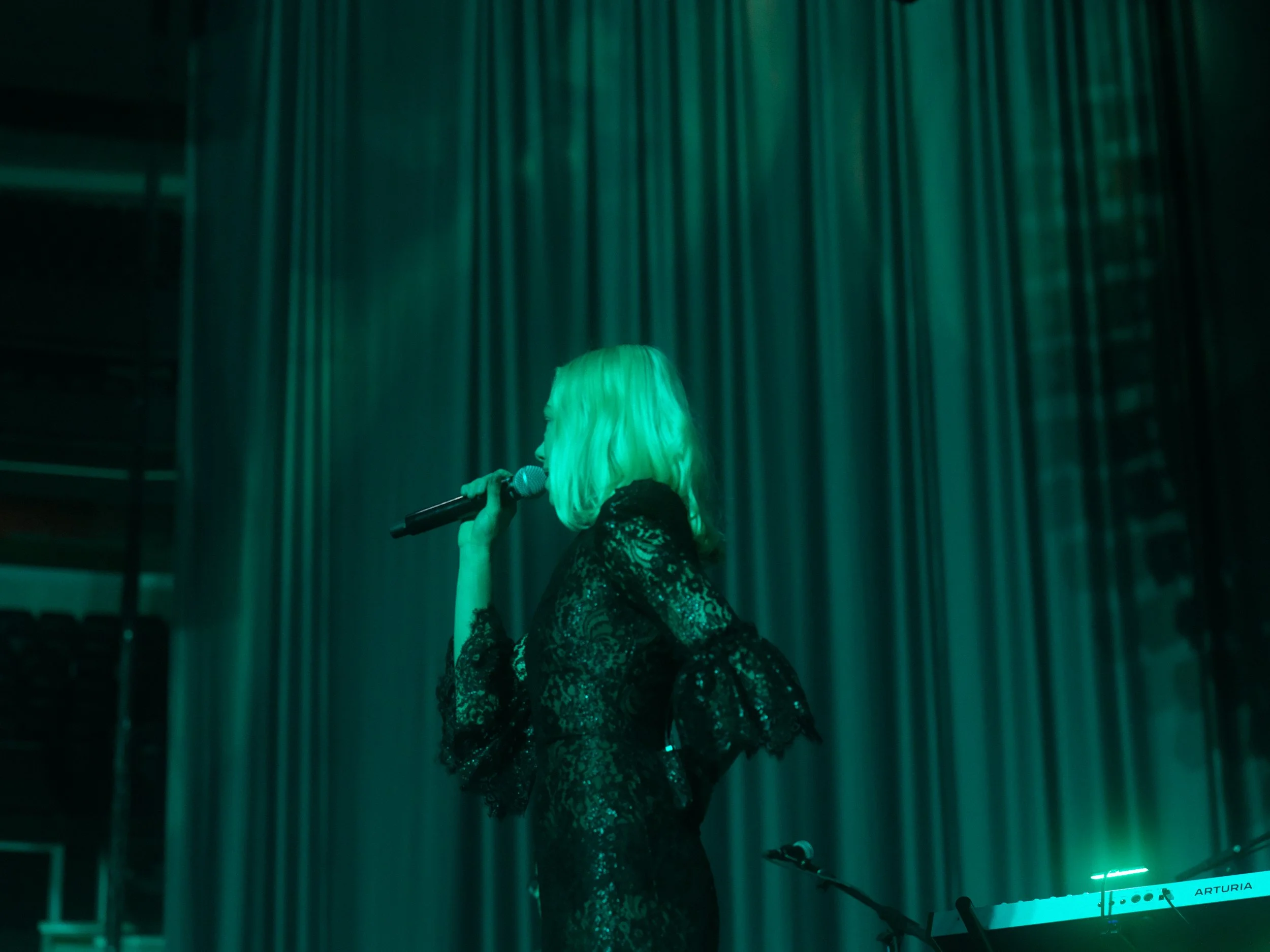
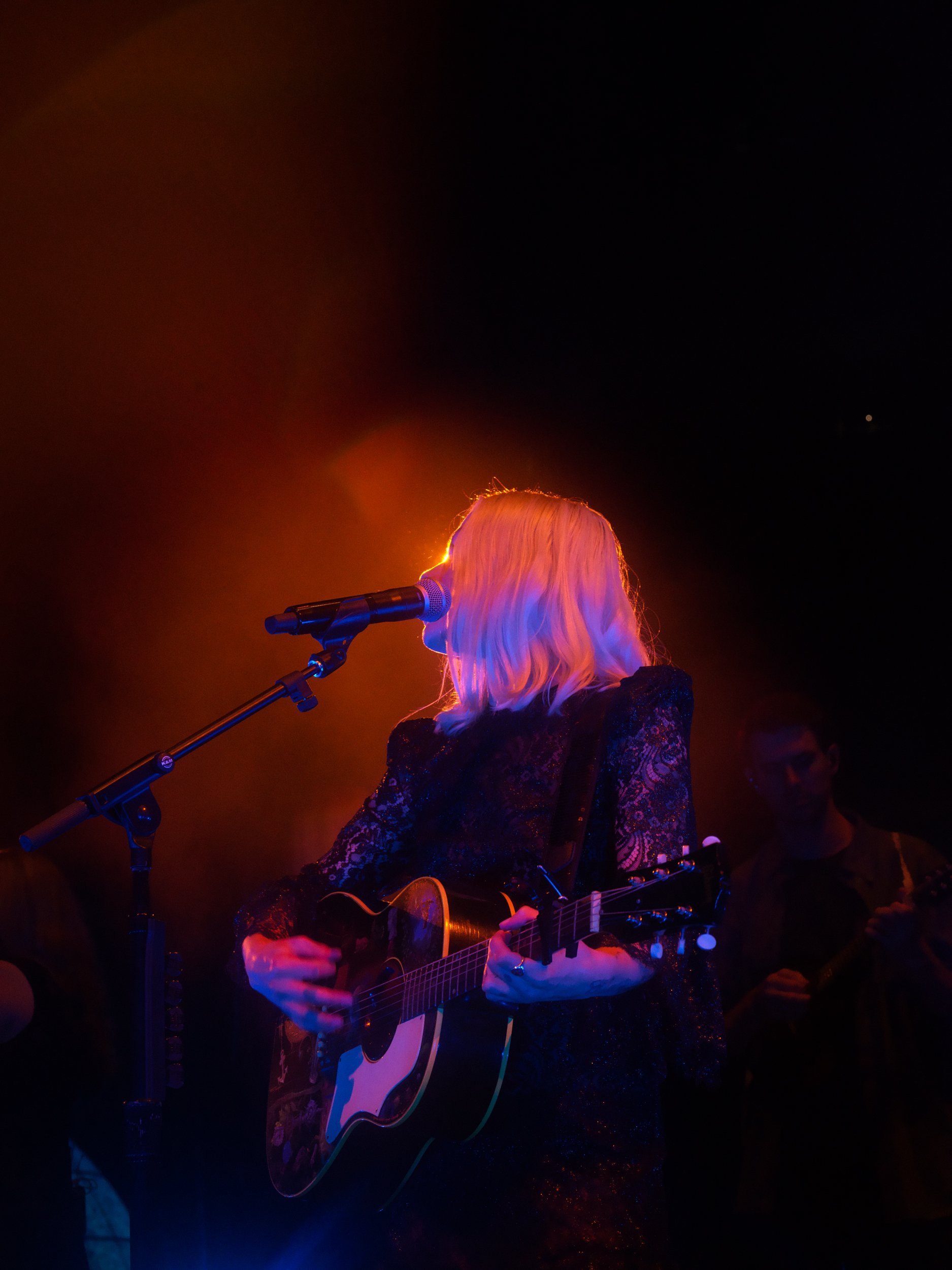
With the iconic first strum of “Motion Sickness” opening the performance, a massive dome taking up nearly the entire stage lifts to reveal Bridgers and her full orchestral band dressed in matching black lace. For much of the first half of the show, Bridgers almost blends into the musicians surrounding her, playing guitar from behind a microphone stand at center stage. But the positioning feels intentional. After engineering such a spectacle around herself, Bridgers gives it room to become the spectacle.
Instead of trying to hold the audience’s attention toward her, she directs them toward the galaxy filling the spaces between. Stars stretch across the arena, planets appear overhead, and gradients of rainbow light wash over the crowd, with the visuals reshaping themselves around each song. After the audience sings “wait” during “Kill Me,” the entire arena is held suspended in darkness before the show moves forward. As “Garden Song” begins, rocks from the infamous Punisher album cover emerge around her, visually pulling the audience back to that era. By the climax of “Lost Weekend,” a plasma ball ruptures above the stage, sending pulsating lasers across the arena as the music jolts under it.
The production is as massive as the arena, but it never feels designed to make Bridgers herself appear bigger. If anything, she repeatedly makes herself smaller. Even as her face appears on the screens, the image is warped with a black-and-white filter, fisheye lens, or a unsteady opacity effect. In a coliseum built to highlight the famed artist standing at its center, Bridgers almost refuses the opportunity. She is not asking the audience to stare at her, she is asking them to look around.
Closing with “Scott Street,” Bridgers stands alone on the B-stage, surrounded on every side by fans. The planets disappear and the stars are gone. After a show that required complete darkness, the United Center is suddenly flooded with the house lights, revealing thousands of smiles spanning generations. At its last moment, a fan-led project takes off and sweeps across the crowd. Without the constraints of a phone in one hand, the audience lifts both arms into the air, swaying left and right while singing the final plea of “don’t be a stranger.” With no footage to immediately replay it, the ending exists only in the memories and stories of the people who were there.